Useful Information on the Roman Empire and its Army
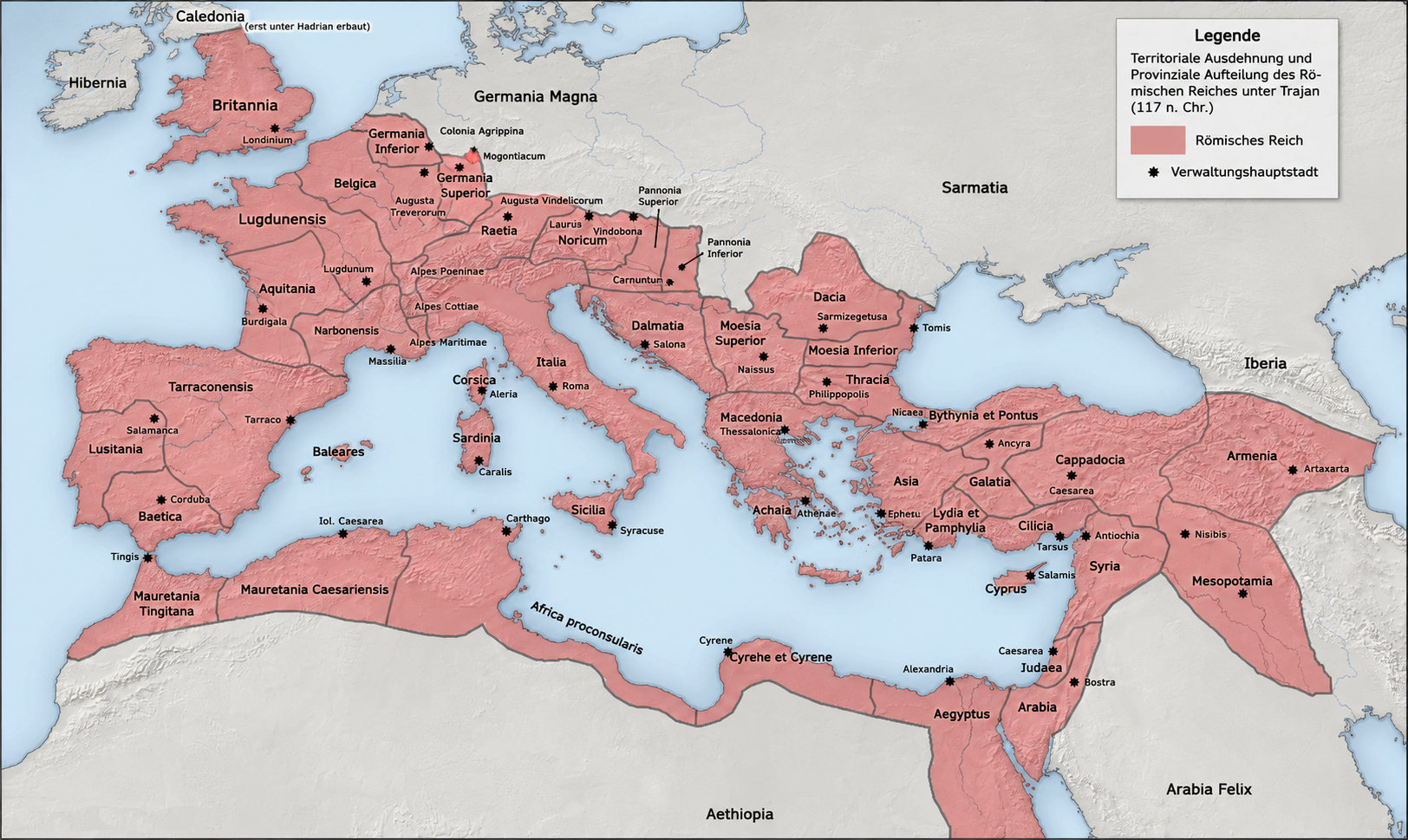 The Empire
Different figures for the size of the Roman army and its troop strength were given over many centuries. This was partly due to overzealous chroniclers or imprecise research. In view of the population of the time, however, some conclusions can be drawn, making these figures reasonably reliable.
According to recent estimates, the entire Roman Empire at the time of Augustus (63 BC – AD 14) had a population of approximately 50–70 million people. This included about 3–4 million inhabitants in Germania, about 4–8 million Gauls or Celts in Gaul, 5 million Romans and another 10 million people (non-Romans) living in Italy. The population of Rome itself is estimated at about 1.2 million. By modern standards of total population and city size, Rome at that time must have made a tremendous, almost unimaginable impression on every visitor.
Ancient authors often reported different figures, but they consistently had a healthy tendency to exaggerate when it came to fallen enemies and their equipment. There seemed to be no limit to self-restraint. The more fallen enemies were counted, the more effective every victory of the Roman legions appeared. Thus, 4,000 fallen enemies could easily become ten or fifteen thousand. Naturally, this happened only on the Roman side. A classic example is the number of Cimbri, Teutons and Ambrones said to have been killed. About a century before our era, they triggered an early migration of peoples when, in search of land and peace, they encountered a rising power: Rome. Eyewitnesses reported that more than one million people had set out and were ultimately destroyed by the Romans. In view of the total population of Europe, however, scholars assume a maximum of 150,000 to 200,000 people between 113 and 101 BC. They not only taught Rome to fear them, but might even have destroyed it had they first overcome their own weaknesses.
The myth of the gigantic giants from the north also dates from this period. According to ancient authors, the Germans were 2.17 metres tall. Countless finds from the last centuries, however, show that Germans averaged only 1.73 metres. The average Roman had a documented height of 1.50 metres. The difference in height between Romans and Germans is nevertheless striking, and the apparent physical superiority of the Germans had to yield to a weapon that was almost impossible to overcome.
This weapon was called “Roman discipline”.
 Bases
Bases Equipment
 Siege warfare
 Navy
Navy